What Deployment Parking Is: Vehicle Storage for Military
Deployment parking is indoor vehicle storage built for military families. Learn why a gated, climate-controlled garage beats a self-storage bay for months.
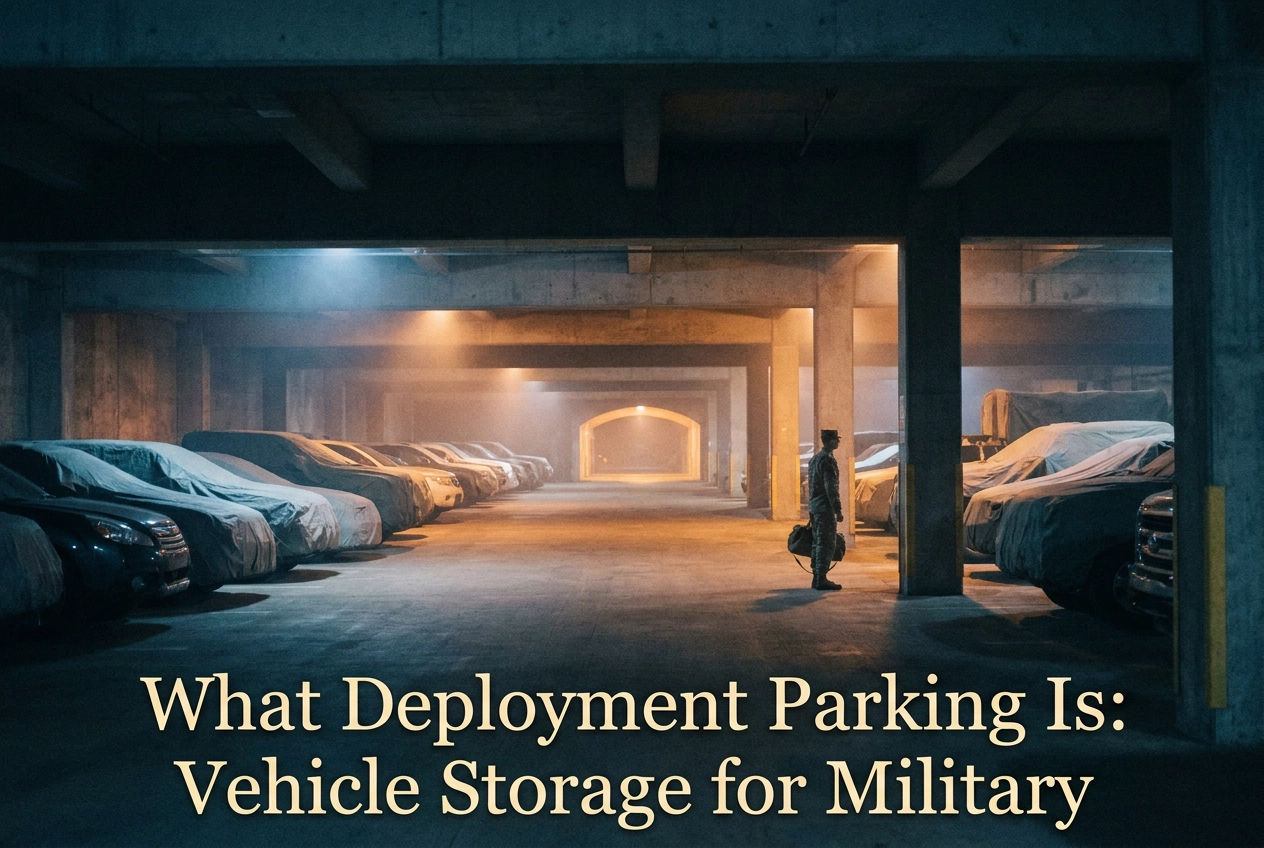
A car left sitting for six months is not the same as a car parked for a weekend. For Norfolk-based sailors and the families who manage their logistics, deployment parking is a distinct category of military vehicle storage. It is not simply a place to drop a car. It is months of an idle vehicle that still needs climate control against coastal salt air, controlled keycard access, 24/7 surveillance, and a staff that can start or move it on request. Renting a self-storage bay may look convenient, but it often leaves a vehicle exposed to humidity, pests, and limited oversight. A gated, climate-controlled indoor garage is designed for long-term storage and removes a recurring source of worry while you are away. This post will define deployment parking and explain what it actually means. You will also see a side by side comparison of a self-storage bay and a gated indoor garage, plus guidance on coastal climate, security, monthly car storage, start-and-move service, insurance and SCRA protections, Virginia rules, Hampton Roads costs, and how to choose before you leave. By the end, deployment parking will be clear, practical, and easier to evaluate.
Why a Car Sitting for Months Is Its Own Category
Months of idleness is a different problem than parking a car for a weekend. A vehicle that sits for six to nine months accumulates flat-spotted tires, a discharged battery, contaminated fuel, and moisture inside brake and fuel systems. Manufacturer long-term storage guidance confirms the need for recurring checks: battery maintenance, tire inflation, rust inspection, and periodic movement.
Hampton Roads sits between the Chesapeake Bay and the Atlantic. Humid, salt-laden air accelerates corrosion on brake rotors, exposed fasteners, and underbody coatings. An open-air bay or uncovered lot exposes those surfaces daily.
Deployment timelines are equally unpredictable. Extension notices, port calls, and flight changes mean the storage window rarely lands on a clean 30-day or 90-day boundary. The option you choose must flex with the orders, not the other way around.
Who handles the logistics also matters. In many Norfolk households, a spouse or parent makes the storage decision and drops off the vehicle, often from another state or time zone. Communication quality is part of the product. An Indoor Monthly Car Storage Solution can remove that recurring worry.
This is why the category deserves its own name. Generic terms like military vehicle storage blur together a 24-hour airport lot, a rented self-storage bay, and a dedicated indoor garage. Those three are not equivalent choices.
What Deployment Parking Actually Means
Deployment parking is long-term indoor vehicle storage for a car that will sit idle for months while its owner is on deployment, on a long underway, or working an extended rotation away from home. The spot itself is not the point. The conditions around it are: a controlled indoor environment, keycard-restricted access, continuous surveillance, and staff who can physically reach and move the vehicle on request. Those are the services that separate a storage product from a parking space.
What sets deployment parking apart is duration. Daily parking, airport valet, and a cruise-week spot are measured in hours or days. Deployment storage is measured in months, so every design choice should be judged against that timeframe.
It also differs from monthly car storage in scope. Monthly car storage describes a billing cycle. Deployment parking describes the service level that cycle should buy: active monitoring, start-and-move support, and someone accountable when you call.
It is not a self-storage unit with a roll-up door. A storage bay keeps a car off the street but ignores humidity, does not control who has access, and leaves maintenance decisions to someone thousands of miles away.
Self-Storage Bay vs. Gated Indoor Garage: Side by Side
Five differences decide it.
Climate. A storage bay typically sits on grade with a vented door and no dehumidification, so humid coastal air cycles through it. An enclosed, climate-controlled garage holds temperature and moisture steadier, limiting rotor corrosion and interior mold on an idle vehicle.
Security. Self-storage is built for household goods: shared gate codes, wide drive aisles, units that open to the outdoors. A dedicated garage adds keycard access, 24/7 video surveillance, and regular security patrols on top of the gate.
Access. Anyone with a gate code can walk past a storage bay, and the unit door is the only barrier. Keycard access tied to a reservation means the facility knows who enters and when.
Staffing. Storage facilities generally will not touch a vehicle stored inside a unit. A staffed garage can start the engine, roll the car forward, and move it on request, the single biggest practical difference over a multi-month absence.
Cost. Self-storage quotes per square foot of dead space you cannot use. An indoor garage spot prices per vehicle. Asphalt Lots in Chesapeake offers guaranteed indoor storage with round-trip shuttle service, so compare total monthly cost, not the headline rate.
Coastal Climate and Salt Air: The Case for Climate Control
Salt air does not stay at the beach. Wind carries chloride particles inland across Hampton Roads, and they settle on any exposed surface. Brake rotors, calipers, and exposed brake lines are usually the first to show it. Coastal chloride deposition is measurable, not theoretical; NASA's beachside test site at Kennedy Space Center has tracked monthly deposition rates since 2010.
Corrosion needs moisture to progress. Chloride is hygroscopic: it holds a film of dampness on metal long after the air has dried. Virginia's summer dew points push relative humidity high enough that condensation forms inside an unheated bay, and that thin film on bare steel is where surface rust begins.
The interior is the quieter risk. A car closed up for months with residual moisture in the carpets and seats can develop odor and mildew, and remediation often costs more than the storage did.
An enclosed, ventilated garage breaks the cycle. With less temperature and humidity swing, condensation events are fewer and less severe. Owners can help by leaving a window cracked only in climate-controlled space, adding a desiccant pack or breathable cover, and never sealing a damp car in plastic.
Security, Keycard Access, and 24/7 Surveillance
Climate control protects the metal. Security protects everything else. The realistic threat to a stored vehicle is not someone driving off in it. It is unauthorized entry, door dings from careless parking, catalytic converter theft on unattended vehicles, and no record of what happened during the months you were gone.
Keycard access changes accountability. Each entry is logged, so a facility can say who entered and when. A shared gate code at a self-storage lot cannot answer that question for a specific bay.
Surveillance matters most when nobody is watching. Cameras over drive lanes and access points document incidents after hours. Patrols catch what cameras miss: vehicles in the wrong place, blocked aisles, signs of forced entry nearby.
Ask what happens when a camera goes dark. A provider with staff on site, a defined patrol schedule, and a phone number a person answers offers a different level of accountability than one you reach only through an app. That difference matters in military vehicle storage, when your car is 6,000 miles away.
Monthly Car Storage and Start-and-Move Service
Security keeps a stored car untouched. Idleness is the other half of the problem, and it is mechanical.
A lead-acid battery left connected self-discharges and sulfates. By month three or four it may not hold enough charge to start the engine. A trickle charger or a scheduled staff start cycle prevents that.
Tires develop flat spots where rubber meets pavement. In summer heat those spots can become permanent. Rolling the vehicle a few feet periodically resets the contact patch.
Fluids degrade too. Fuel oxidizes and leaves varnish in the injectors and tank. Brake fluid absorbs moisture from humid coastal air. Oil film drains off cylinder walls. A start-and-move cycle exercises all three.
This is the service that separates monthly car storage from renting dead space. A staffed facility can run it on a set schedule and document each visit. Before you sign, ask how often a vehicle is started or moved, whether it is documented, and who is authorized to do it. Get the answer in writing.
Insurance, SCRA Protections, and Virginia Rules for Stored Vehicles
Start-and-move service solves the mechanical side of storage. The legal and financial side needs attention before drop-off.
Insurance first. Most carriers assume a vehicle is driven, so months of idleness can void or limit coverage. Ask your insurer whether a stored-vehicle endorsement or reduced-use policy is required, and get confirmation in writing before the car goes in.
Virginia rules do not pause for deployment. Registration renewal and inspection deadlines still apply, so check current Virginia DMV guidance on long-term storage and active-duty provisions. Under the Servicemembers Civil Relief Act (50 U.S.C. § 3901 et seq.), active-duty members receive protections on interest rates, leases, and certain civil obligations; review current SCRA guidance for your situation.
If the car is financed, the lender's insurance requirement continues. A coverage lapse can trigger force-placed insurance at your expense, often at a much higher premium.
Document everything at drop-off: photos of the vehicle and odometer, the signed storage agreement, and the name of anyone authorized to retrieve it. That record is what settles disputes months later.
What Monthly Car Storage Really Costs in Hampton Roads
Total cost, not the advertised rate, is the number that matters. A cheap self-storage bay plus a cover, a trickle charger, and a relative who drives over monthly to start the car can cost more than a staffed indoor spot.
Call your installation first. Navy MWR runs vehicle storage programs at some Hampton Roads installations, including NS Norfolk, NSA Hampton Roads, JEB Little Creek-Fort Story, NAS Oceana, NSA Portsmouth, and NWS Yorktown. Eligibility, capacity, and pricing vary, and lots fill, so confirm details with your MWR office.
Private indoor storage covers what installation lots cannot. Secure indoor vehicle storage in Chesapeake at Asphalt Lots offers guaranteed indoor spots in a gated, multi-level garage with 24/7 video surveillance and keycard access, accommodating standard vehicles, motorcycles, and scooters within a 7-foot-10-inch height clearance.
Read the fine print. Ask about fuel surcharges, shuttle fees, minimum terms, and early retrieval penalties before committing.
Finally, confirm the deployment rate in writing. Published cruise parking rates cover a different product than long-term storage, so never assume the cruise number applies to your months away.
How to Choose Deployment Parking Before You Leave
With the cost picture clear, the next step is a short pre-departure checklist. Match the storage type to your orders first: a two-week underway does not need the same facility as a nine-month deployment, so do not pay for climate control on a short trip. For extended absences, confirm five things in writing: enclosed climate-controlled space, keycard or otherwise restricted access, surveillance coverage, a documented start-and-move schedule, and a phone number answered by a person. Prepare the vehicle so the storage does the work: fill the tank and add stabilizer, set tires to the recommended pressure, connect a trickle charger only if the facility permits it, clean and dry the interior, and remove all food or perishables. Handle paperwork while you still have connectivity. Verify insurance still covers a stored vehicle, update registration and inspection dates, and name an authorized person who can retrieve the car if your orders change. Then let it go. The right provider exists so a car sitting in Hampton Roads for months stops being a recurring item on your mental list. That is the whole point of deployment parking.
Deployment Parking, Defined
With the checklist settled, here is the category in one sentence.
Deployment parking is long-term indoor vehicle storage with the conditions an idle car actually needs: climate control against coastal salt air and humidity, keycard-secured access, 24/7 surveillance, and staff who can start or move the vehicle on request. Generic monthly car storage only keeps a car off the street. Deployment parking protects the asset while you are 6,000 miles from it, and the difference shows up the day you return to a car that starts on the first turn.
Start your search with your installation's MWR program, then compare it against a dedicated indoor garage on total monthly cost and the five verification points above. Asphalt Lots is veteran and family owned, headquartered in Chesapeake about 15 minutes from the Norfolk Cruise Terminal. The facility offers guaranteed indoor storage in a gated, multi-level garage with 24/7 video surveillance and keycard access. Visit asphaltlotsva.com or call 888-441-7275 to reserve a spot. We have got this. Go do what you need to do, and we will be here when you return.
Conclusion
Deployment parking is more than keeping a car off the street. It means long-term indoor storage with climate control against Hampton Roads salt air and humidity, keycard-secured access, 24/7 surveillance, and staff who can start or move your vehicle on request. Before you leave, compare self-storage bays against a gated indoor garage, confirm insurance and SCRA protections, and verify the five points that matter. The payoff is simple: one less thing on your mental list while you serve. Start with your installation's MWR program, then contact Asphalt Lots at asphaltlotsva.com or 888-441-7275 to reserve guaranteed indoor storage. Deploy with confidence. We will keep it safe, and you will return to a car ready to start.